


Archive № 003 · Case · Course project, real brief · November 2026 · 10 min
ASHTRAY: a brand bigger than its first product
A brief for a pocket ashtray, and the question it left out.
Context
- Role
- Brand strategy, communication strategy
- Client
- Ashtray, portable ashtrays · real brief from the founder
- Context
- Brand strategy course by Aram Simonian (I Am Idea), Ninja School
- When
- February–April 2026
Ashtray makes a portable ashtray that opens like a rubbish chute and is priced like a fashion accessory. Its founder brought it to our brand strategy course as a real brief. The brief asked for bold ideas. The harder question sat underneath it: what is this brand actually about?
This case in four parts
- 01ContextA product without a story yetWhat Ashtray made, what the brief asked for, and the question it left open.
- 02PreparationWhat nobody can argue withResearch, an interview, and the one thing every customer would agree on.
- 03ExecutionWho it talks to, and what it isThe people behind the brief, the brand idea, and how it sounds.
- 04ResultOne idea, three campaignsImage, product and reactive communication, and what I took from it.
A product without a story yet
What Ashtray made, what the brief asked for, and the question it left open.
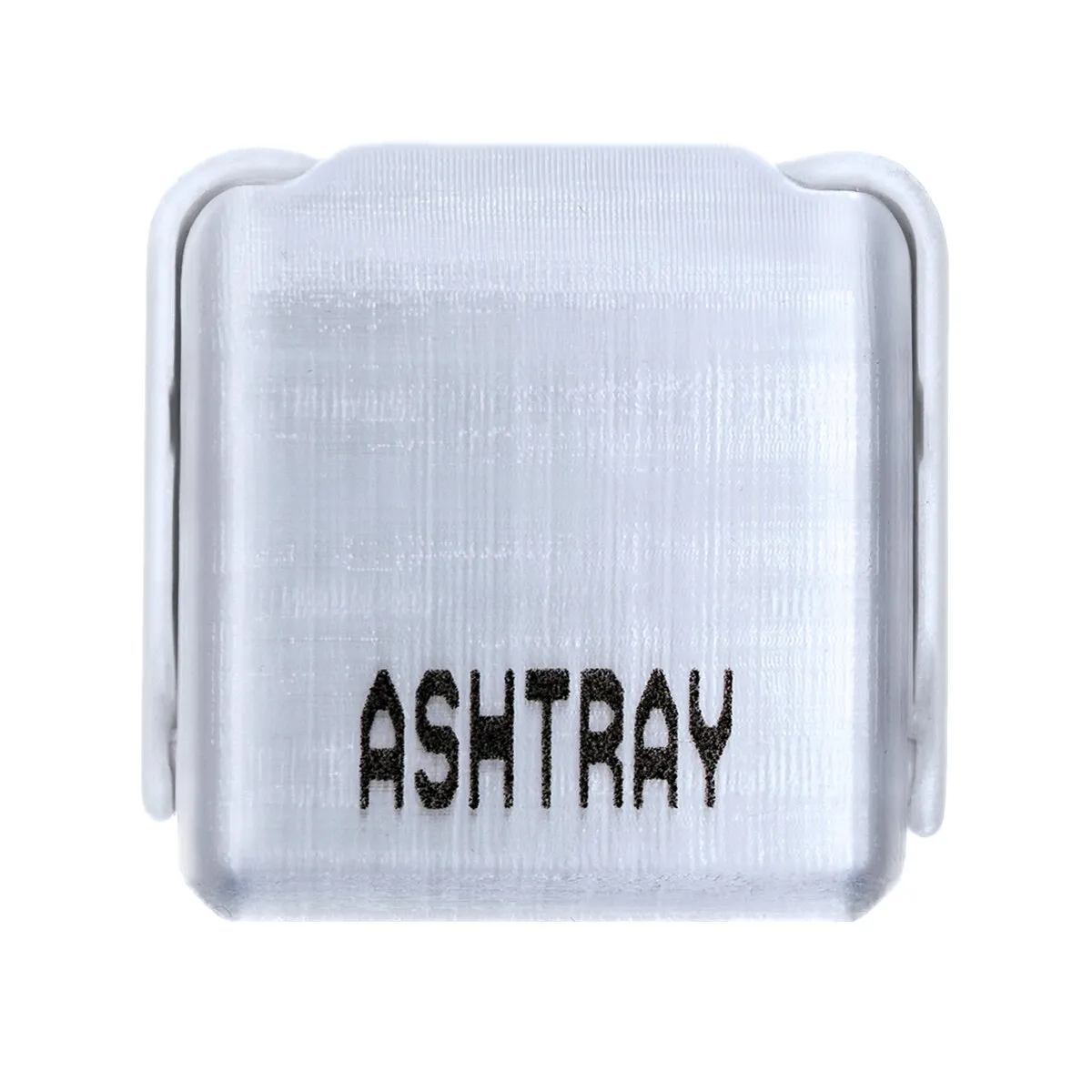
Ashtray started with one object. It is about the size of AirPods, holds more than ten butts, and closes airtight thanks to a silicone seal. From the outside it looks simple. Inside, the mechanism borrows from a rubbish chute that tilts open towards you, and it takes eleven parts to make that work.
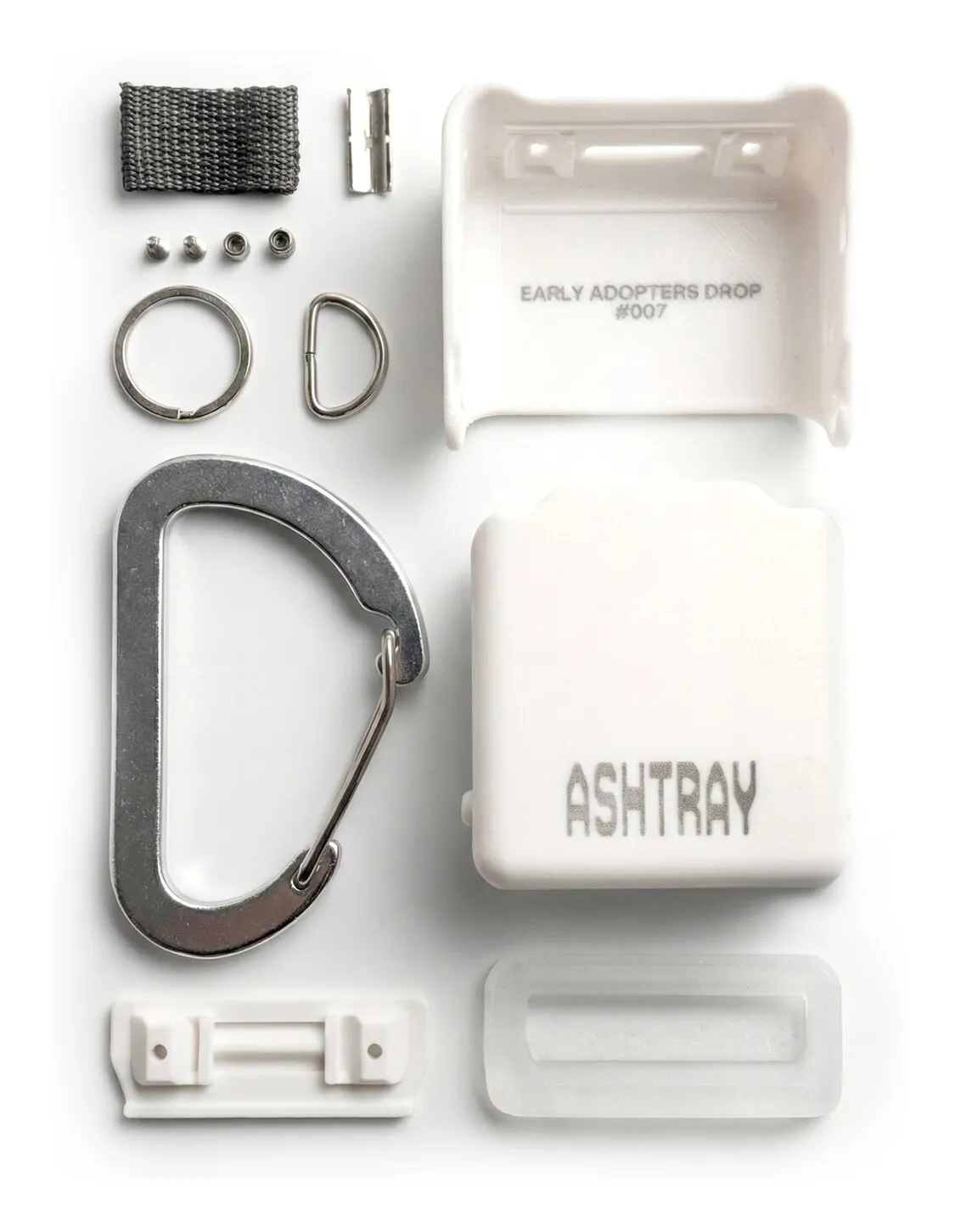
- Strapfabric
- Strap holdersteel
- Housingplastic
- Boltssteel
- Nutssteel
- Ringsteel
- Half-ringsteel
- Carabineraluminium
- Bowlplastic
- Seal holderplastic
- Sealsilicone, keeps it airtight
The brief described two products at once. The first was a solution for smokers who are tired of putting their butts in their pockets, back in the pack where they smell, or, when the taxi arrives and there is no bin, on the ground. The second was a fashion accessory: several early users said they had started choosing clothes to go with their Ashtray, not the other way round.
The audience was precise. Hipsters aged 18 to 43 in Kyiv, Berlin, Paris and London, part of the creative and fashion scene, who mostly smoke roll-ups and care about the planet. The ambition was too: in five years, five out of ten people in the smoking area of a hipster bar should carry an Ashtray. The founder compared the moment to the iPhone the day before it came out.1
So what was Ashtray? A smoking brand, a fashion brand, or something else? I didn’t know, and without the answer I couldn’t go further. So before writing a single line of strategy, I wrote to the founder. Was Ashtray a one-product brand for good, or a maker of ashtrays today and a brand of conceptual, useful accessories tomorrow? If an idea for another object came up, would it carry the Ashtray name? In the end, I told him, all my questions were about one thing: who you are as a brand, and who you definitely are not.
His answer changed the brief.
The plastic portable ashtray is the brand’s first product, the second will be metal, but over time we’ll expand the line into industrial design and fashion. We already have three products in the works that we plan to launch this year. Only one of them has to do with smoking.
A few messages later he put the order of things in one line: “The portable ashtray is the brand’s flagship product, and everything else dances around it.” The other objects would be less revolutionary, he said, made more for fun, to make the brand cooler for its audience and add to its value.
So the ashtray would stay at the centre, but the brand had to hold things that have nothing to do with cigarettes. A brand built on smoking would have to be rebuilt the day the second object launched. I needed something underneath the ashtray that could carry all of them.
What I took from that conversation:
The ashtray was the first product. The brand had to be about something bigger.
What nobody can argue with
Research, an interview, and the one thing every customer would agree on.
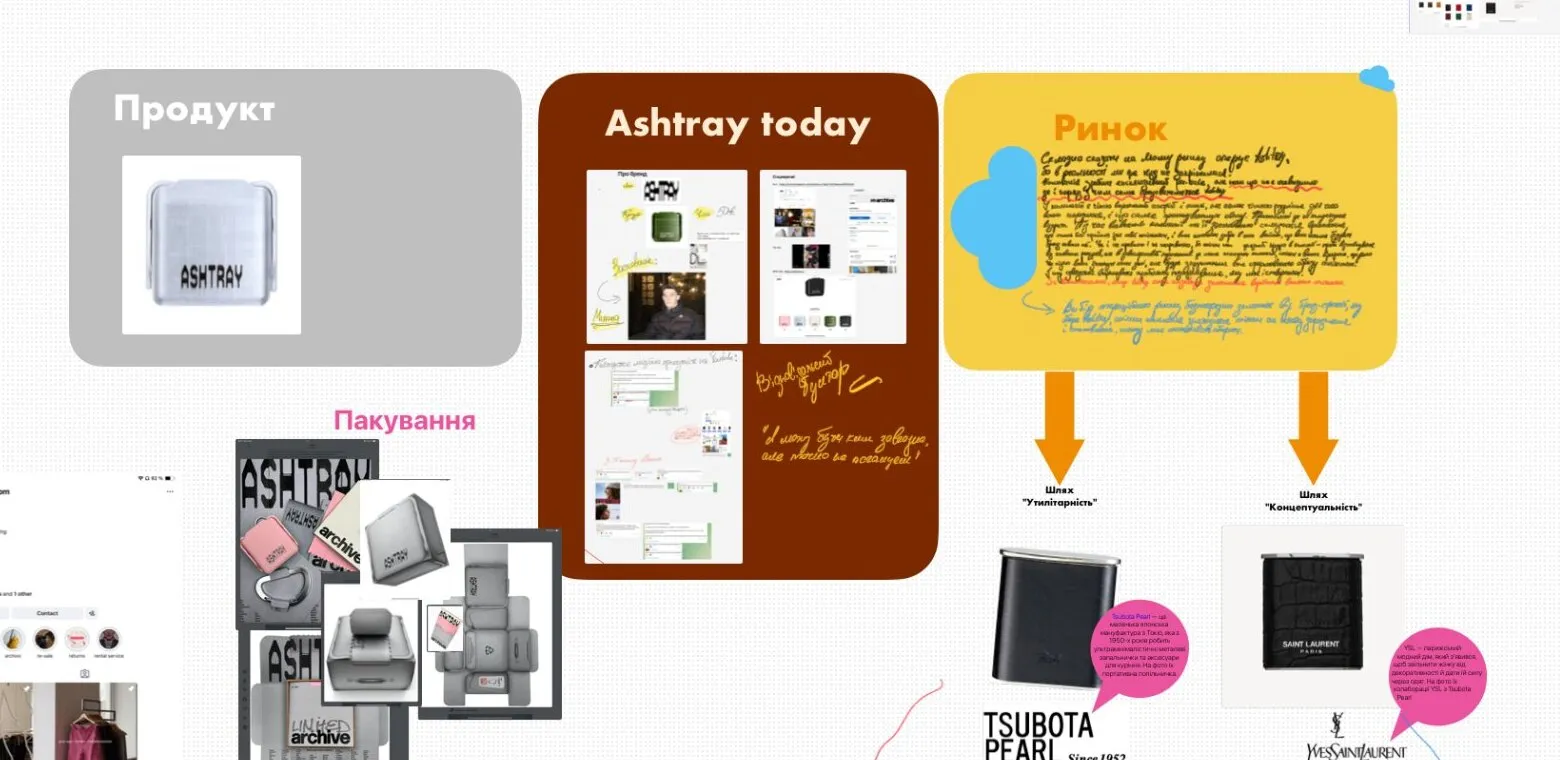
Nobody was rushing us on this course, so I did the research the old way: hours of following one link to the next, with everything pinned to one board. The product, Ashtray today, the market, the sales channel, the packaging.
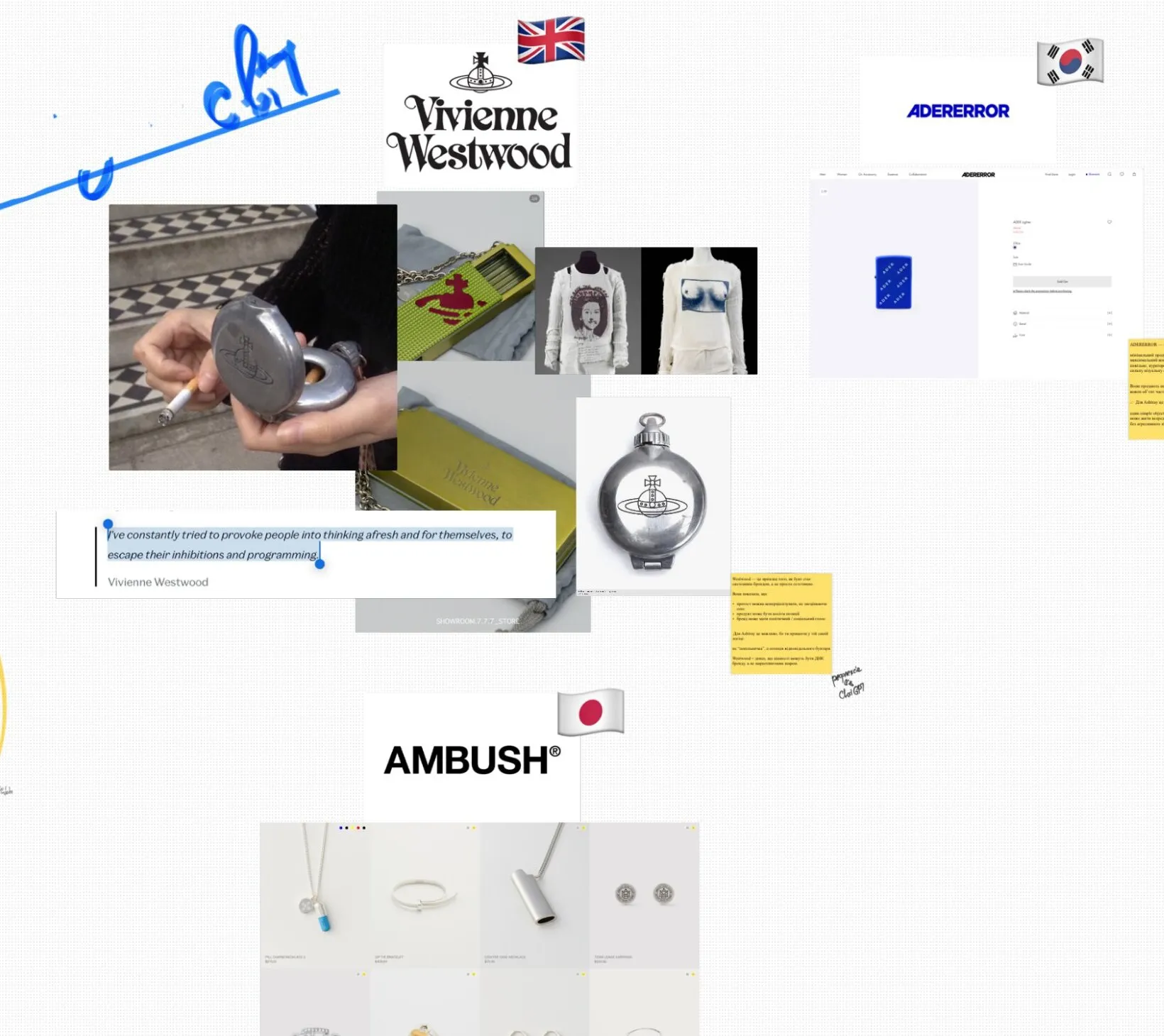
The brief said there were no branded portable ashtrays in the world, only cheap ones on AliExpress. The board said otherwise. In fashion, Vivienne Westwood and Saint Laurent had made ashtrays as objects of desire. In Japan, Tsubota Pearl, a Tokyo maker of metal accessories since 1952, sold portable ashtrays as everyday tools.2 That gave Ashtray two roads: utility, like Tsubota Pearl, or concept, like Saint Laurent.
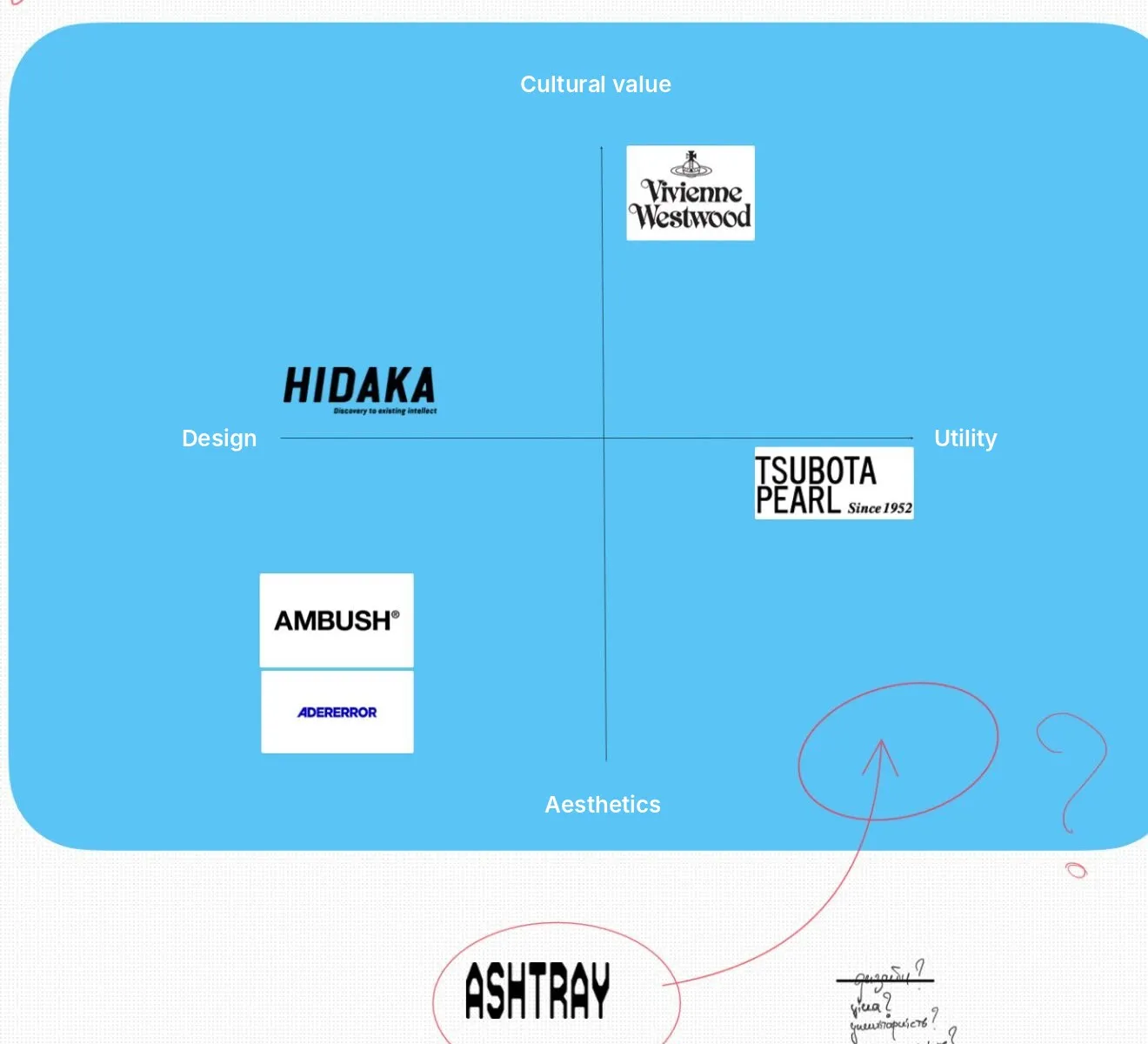
I put the brands I found on a map, with design against utility on one axis and cultural value against aesthetics on the other. Fashion and design brands crowded the design side. Tsubota Pearl sat almost alone on utility. The corner where a useful object is also a beautiful one was open, and that is where I drew Ashtray.
Japan showed something else: the category already works when the rules push people towards it.
Europe is going the same way. Paris fines a thrown butt €135, and in 2025 the city started handing out 400,000 pocket ashtrays for free.3 That changed how I read the price. If the function can be had for nothing, people paying $60 are paying for something else. The brief named it style. I wasn’t sure that was it.
For the founder, solving that problem was the whole point. “We can’t sell, say, a million stationary ashtrays,” he wrote to me. “But portable ones we can, because we want to be the first brand that fully closes smokers’ problem with butts.”
So I went back to the problem the brief described and asked a plain question: do we even need to solve it? Yes, but the butt itself is not the problem. It is a weight you carry until you find somewhere to drop it. One of the people I interviewed put it better than I could.
Sometimes I feel like having a cigarette somewhere, but I don’t, because there’s no bin nearby. In the mountains I either keep walking until I find one, or I use an empty beer bottle.
Then I cleared the table. Whether Ashtray reflects your style, carries your values or matters for the planet is personal: true for some, not for others. A brand that wants five people out of ten can’t stand on any of them. One thing is true for everyone who carries it, though. With Ashtray you can light up exactly where and when you feel like it, without waiting for a bin or an ashtray to appear.
In the deck I made it concrete with places, the kind where you want a cigarette and won’t find a bin.
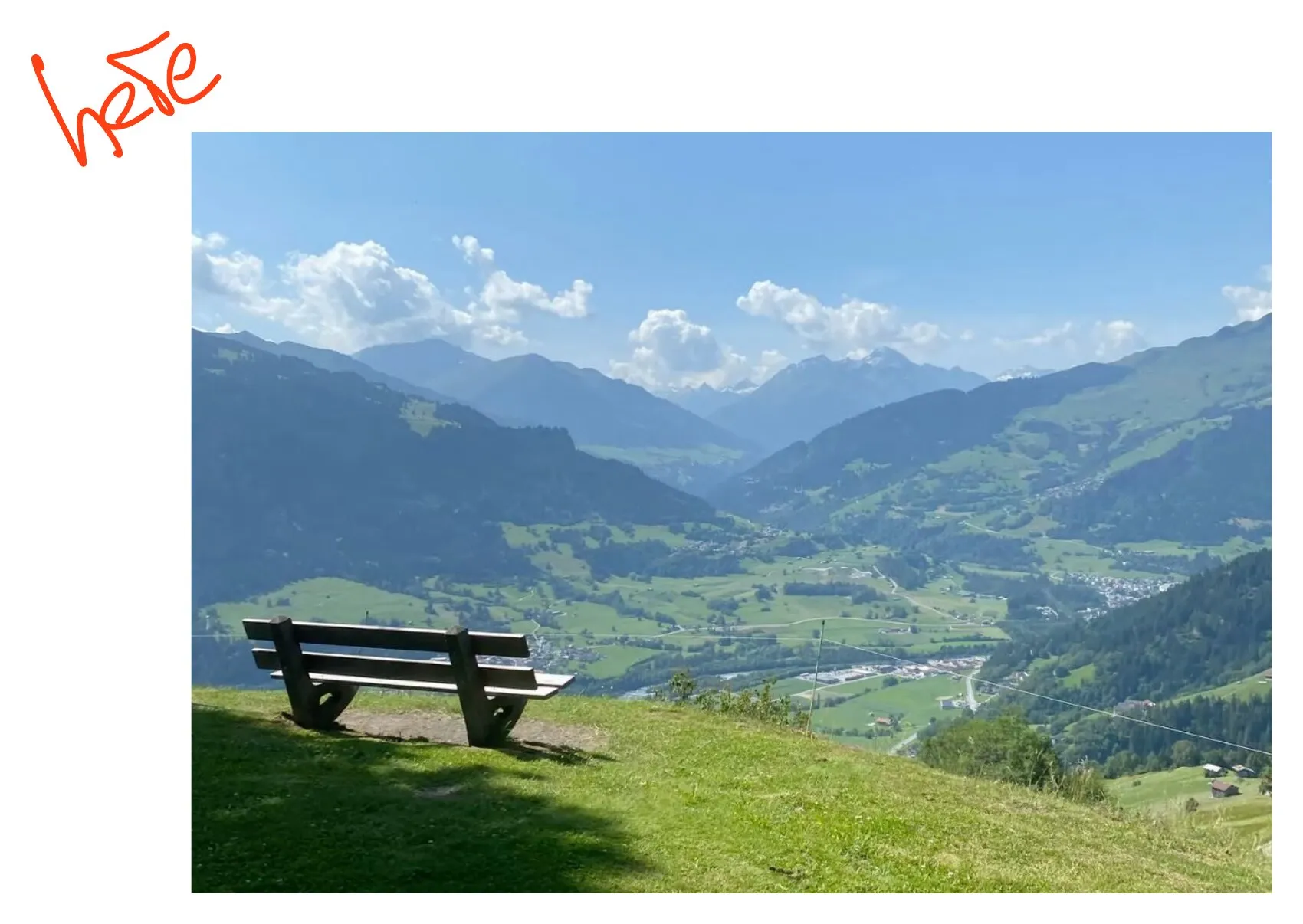
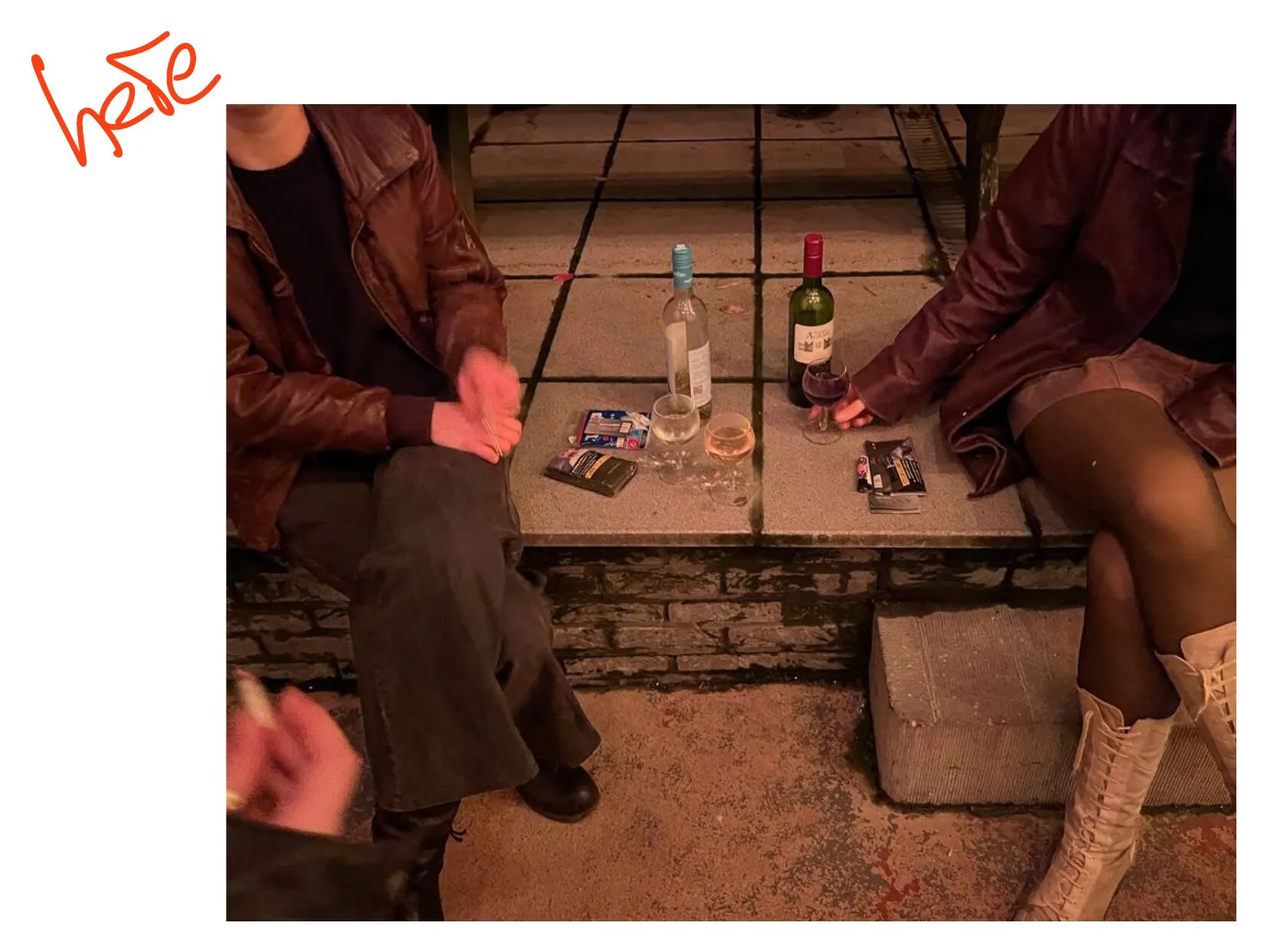
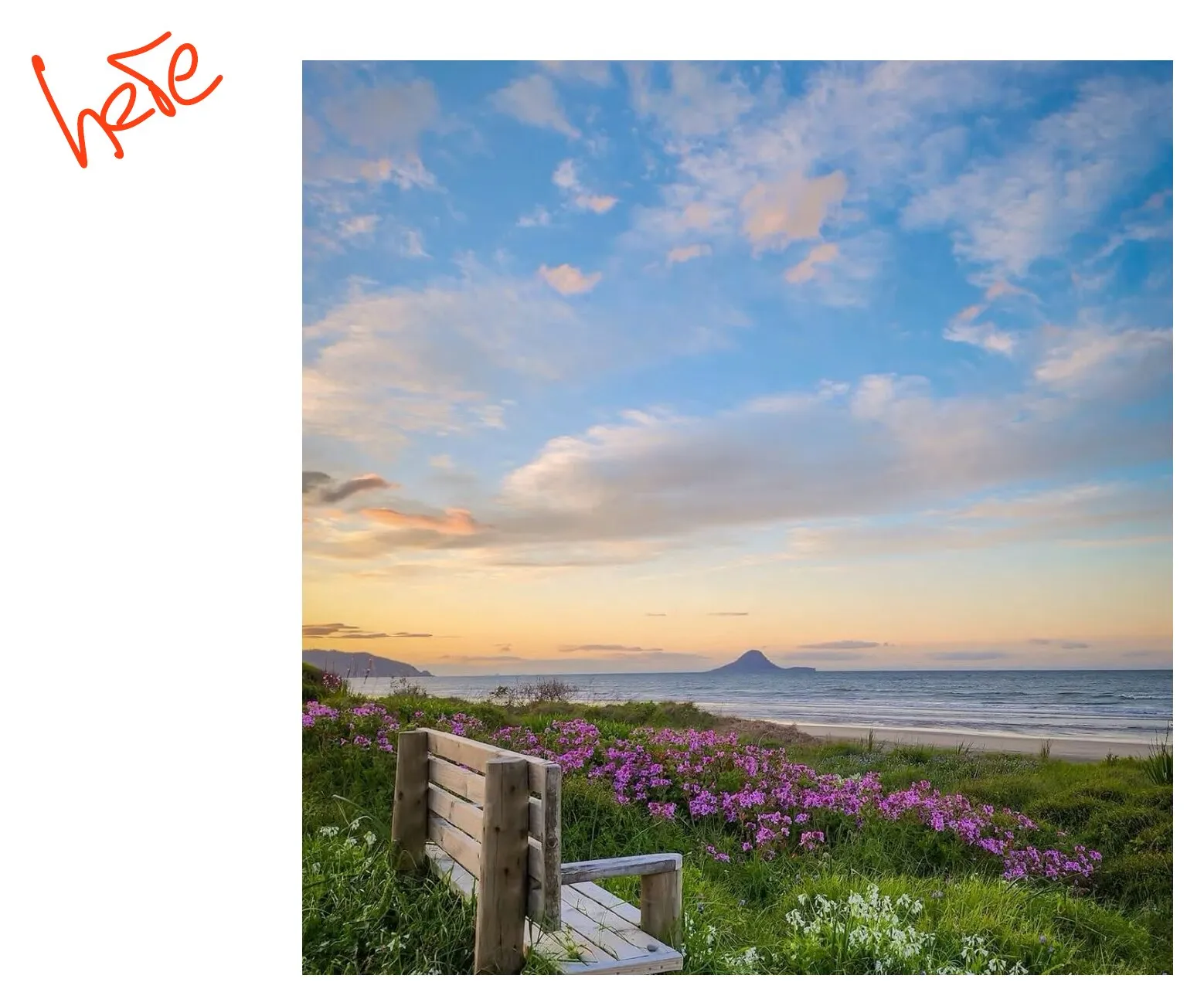
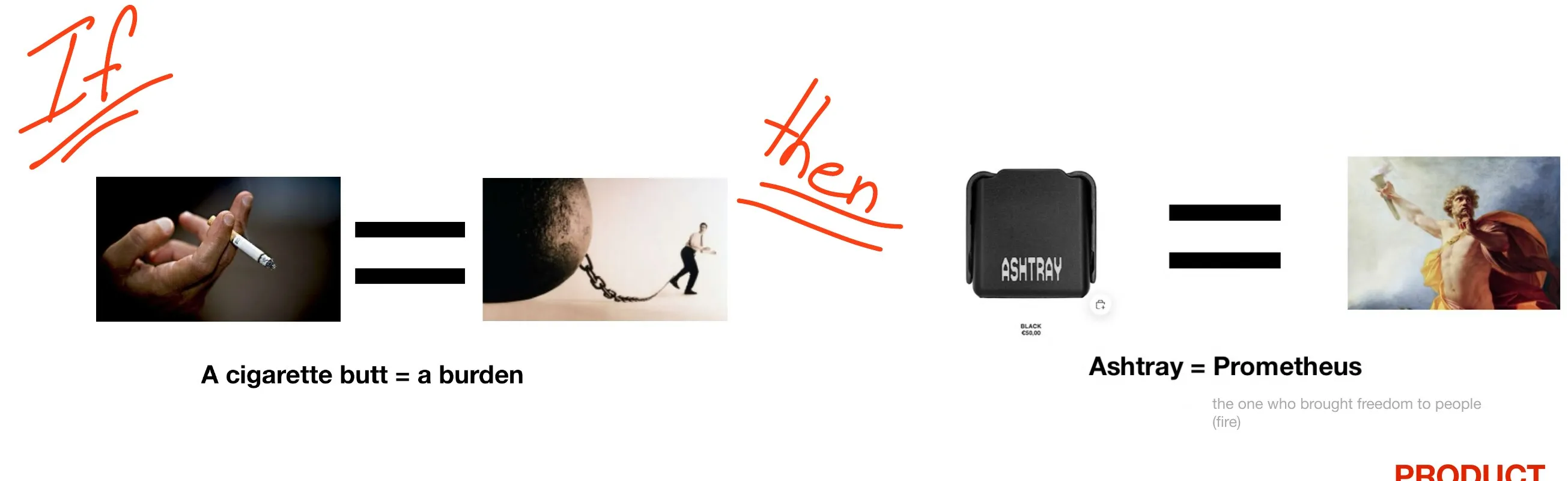
If a butt is a burden, then Ashtray is the one who takes it off you. I wrote it on the slide as Prometheus, the one who brought people fire, and with it freedom.
Who it talks to, and what it is
The people behind the brief, the brand idea, and how it sounds.
Freedom also told me who Ashtray really talks to. Under the age, the cities and the roll-ups, the people in the brief value freedom above almost everything. Their enemies are frames, standards, bans and “because everyone does it”. Their fear is becoming part of the system.
But they are intellectuals, and they won’t buy freedom by breaking the rules. They don’t throw the butt on the pavement. They adapt to the rules in a smart way, so the rules take away as little of their freedom as possible. The thing that helps them do that is an adapter. That is what Ashtray is.
From there the mission wrote itself: Ashtray gives people two kinds of freedom. Freedom of action, the practical side: smoke anywhere, anytime. And freedom of self-expression, the symbolic side: you carry a small rubbish bin on you, it helps the planet, and it looks like an object from the future.
It also gave the founder the filter he didn’t have. From now on, every Ashtray product has to give at least one of these two freedoms. A metal ashtray passes. So would an object that has nothing to do with smoking, as long as it widens what you are free to do or to say about yourself.
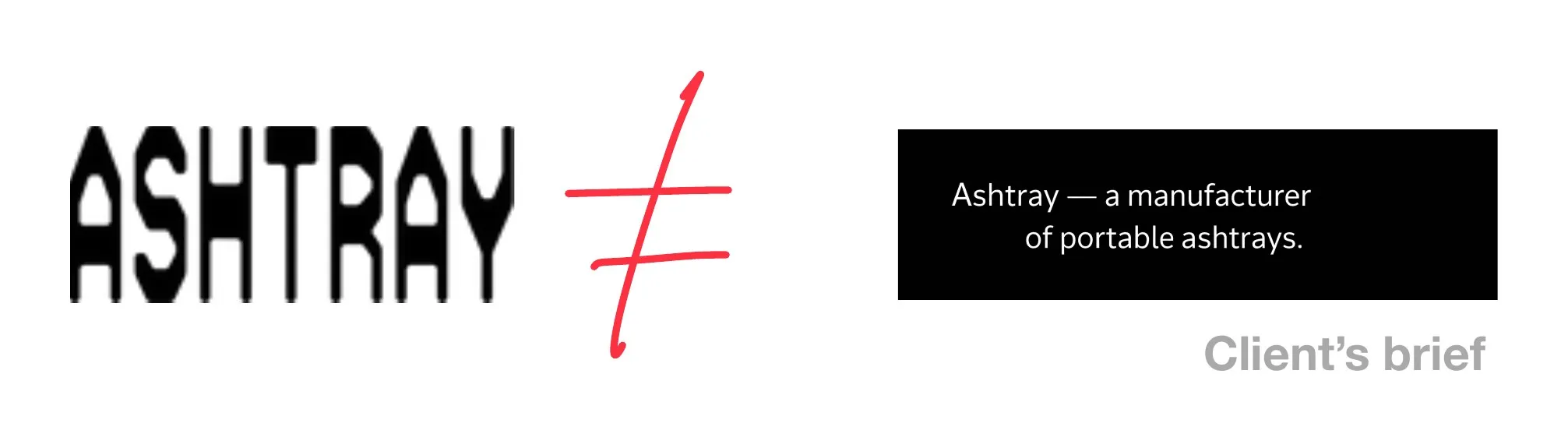
One question was left: what kind of company is this? The first product was made almost by accident, and the founders couldn’t yet say whether it would stay the only one, become the flagship with smaller products around it, or be followed by another idea as good as the first. A company like that is a lab: it experiments, tests and keeps what works. So Ashtray stopped being “a manufacturer of portable ashtrays”, as the brief put it, and became a concept design lab.
Brand idea
Ashtray, a concept design lab. We create design objects that expand the space of your freedom.
The full brand model reads as one sentence. For people who want more freedom of action and self-expression, Ashtray is a concept design lab that creates design objects which expand the space of personal freedom, because it rethinks everyday objects and gives them functional and symbolic answers in forms that didn’t exist on the market before.
A lab still needs a voice. I described Ashtray as a person, the middle child of a family. Parents split their attention between the oldest and the youngest, so the middle one learns early to rely on himself. He is socially flexible, an empath with character who knows how to negotiate. He respects authority less than the oldest and rebels less than the youngest, but nothing stops him when he decides it’s needed. And he adapts to almost any situation.
In archetypes, that is a Creator, because Ashtray makes things in ways nobody has before, and an Explorer, because a lab keeps testing and changing until the object is right. The voice that comes out of it is calm and confident, intelligent, with light irony and never a lecture. In the tone-of-voice description I wrote for him: “He is neither a leader nor a follower. He follows his own path.” And he speaks only when there is something worth saying.
One idea, three campaigns
Image, product and reactive communication, and what I took from it.
The communication strategy came from the same idea. One master line for the whole brand, and under it three levels with different jobs: the image campaign says what Ashtray stands for, the product campaign sells the object, and the reactive one answers the news.
Master ideaFree to have it the way I want it
01 · Image
Expand the space of your freedom
What the lab stands for, for people who adapt the rules instead of breaking them.
Calm, intelligent, ironic
02 · Product
Anytime. Anywhere.
The ashtray gives you the freedom to smoke anywhere, anytime.
Direct, minimal, confident
03 · Reactive
The cost of freedom
Real fines, bans and norms, and Ashtray as the smart way round them.
Sharp, witty, opportunistic
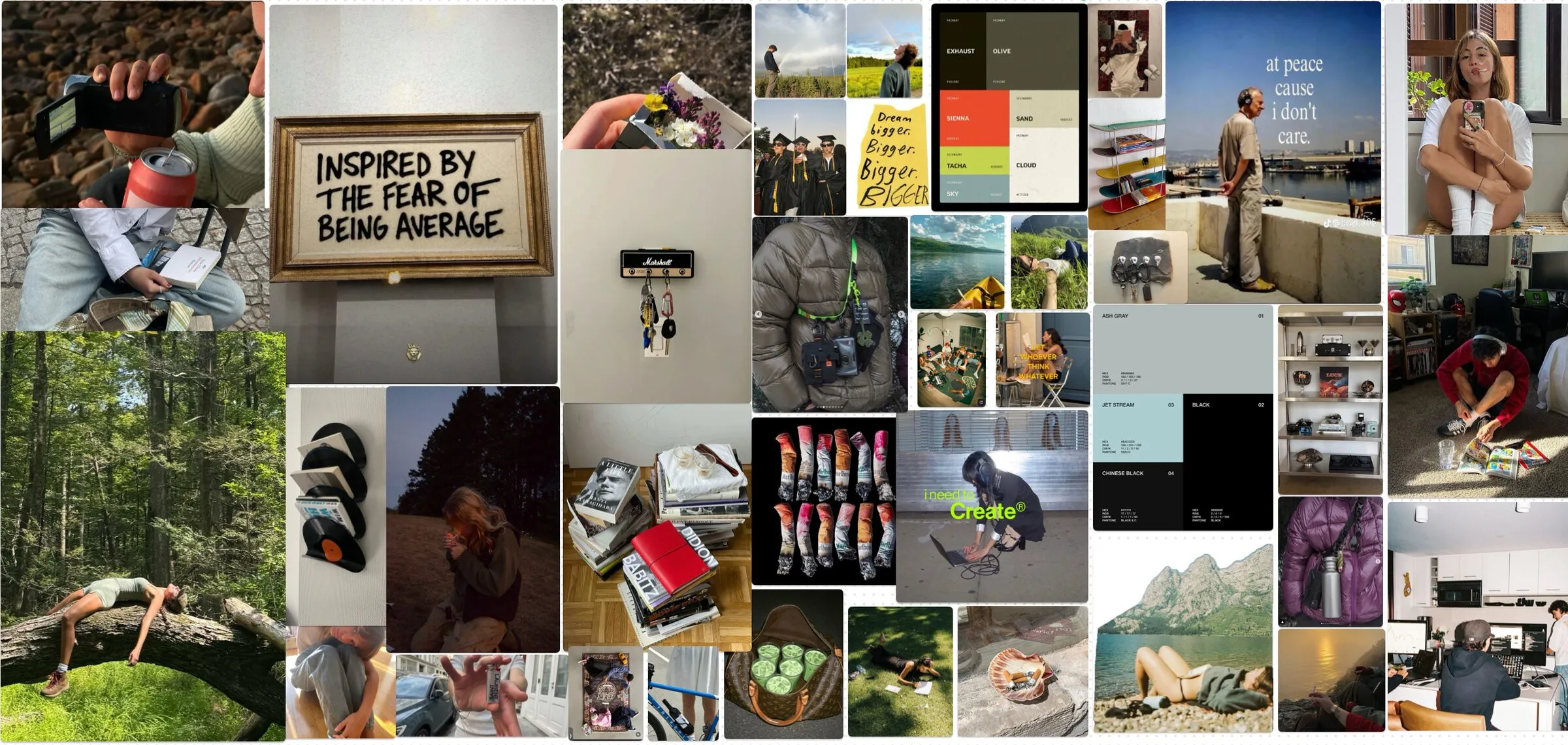
The image campaign starts from the audience insight. Freedom-seekers of this kind don’t go for open revolt; they know the rules and bend them on purpose. So the message speaks to people who think differently and don’t break the system, but use it to live on their own terms. I set its mood on a board before writing a word.
The product campaign is the most literal of the three, on purpose. Its insight is Michael’s: even when you want a cigarette, you don’t, because there is nowhere to drop the butt, or you improvise. Its message is one sentence, and its line is two words. The first key visual puts the object itself on the poster. The others put the line where you would actually want to light up: a hill at sunset, a roof, a field above the clouds.
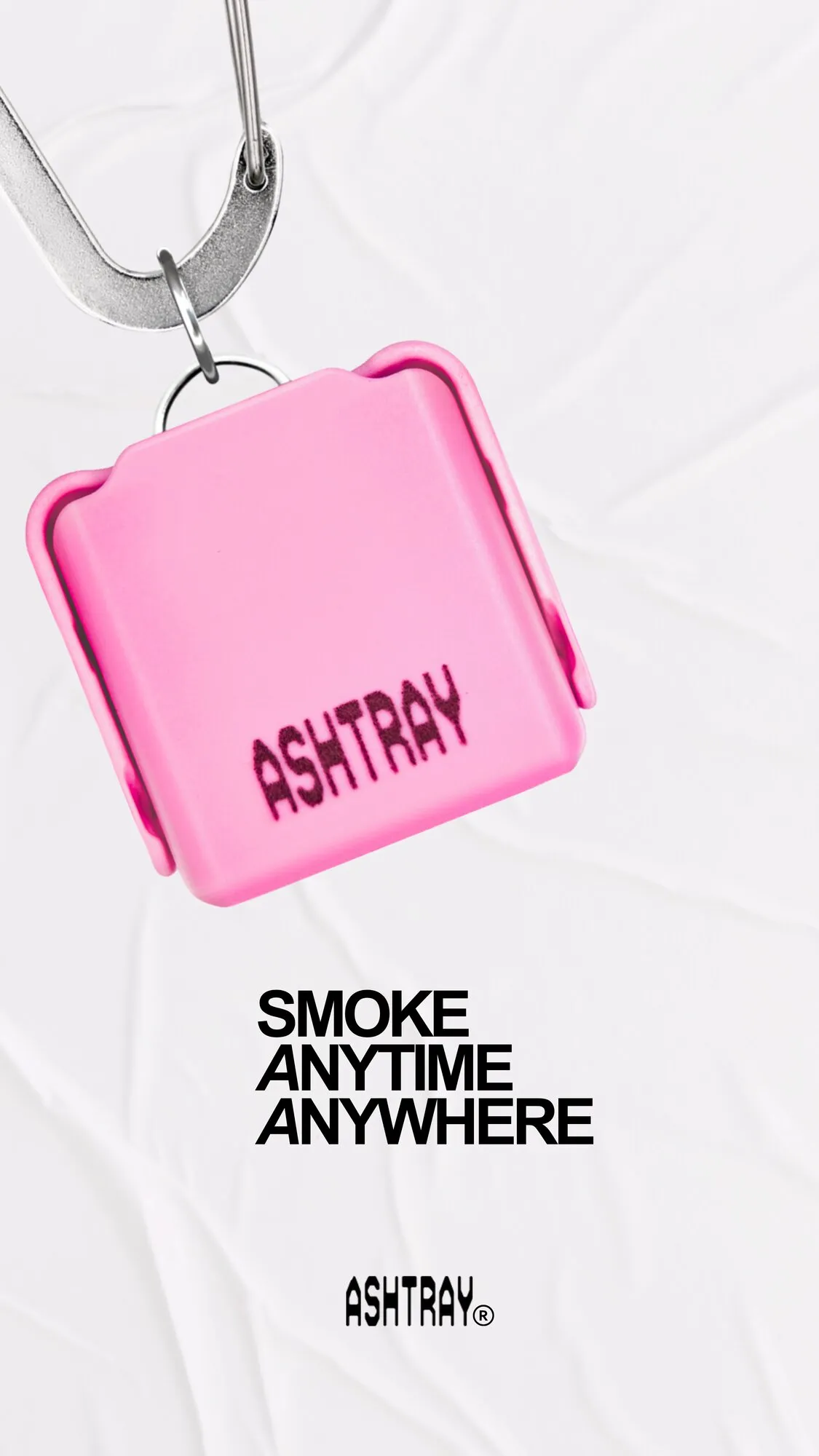
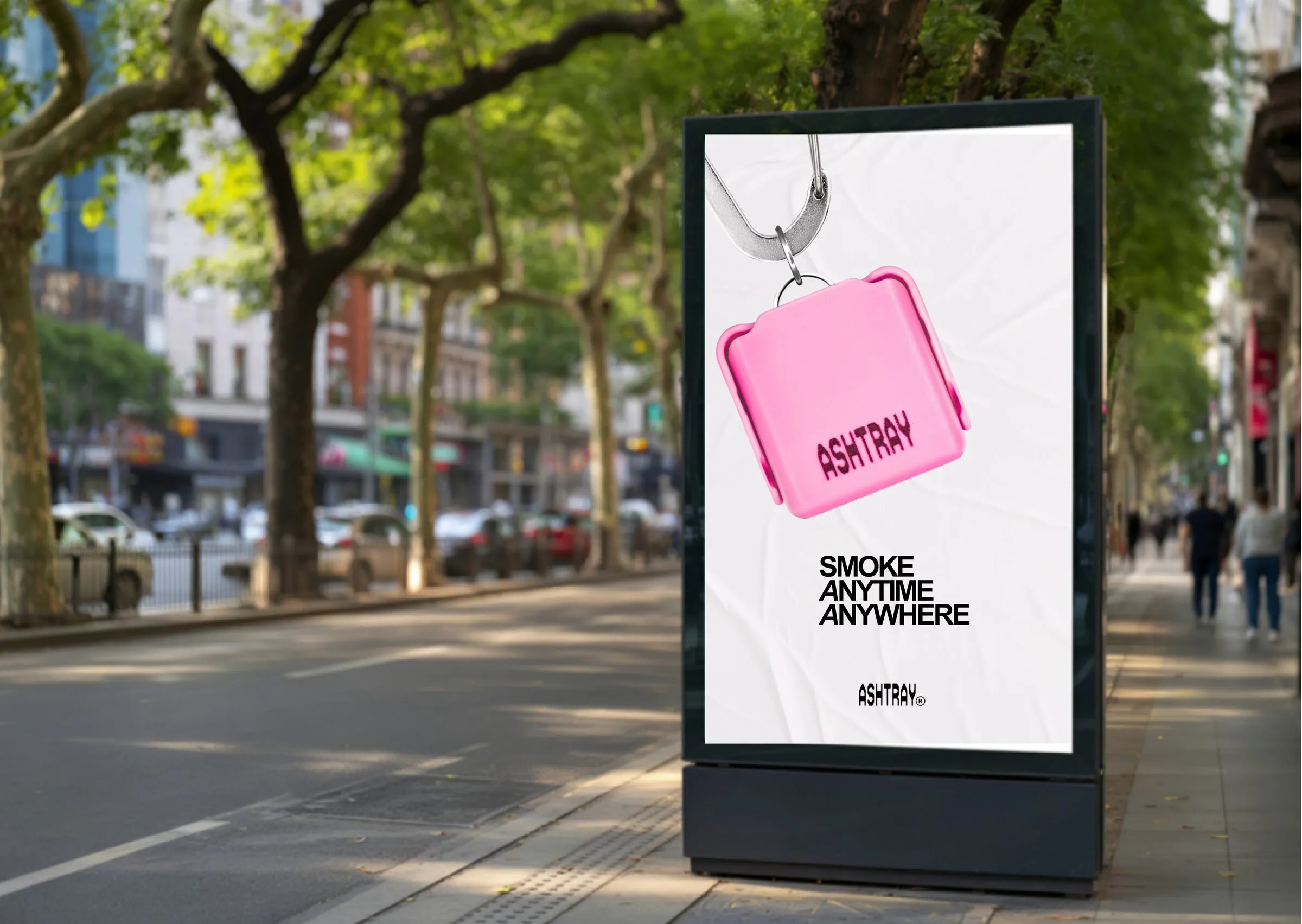
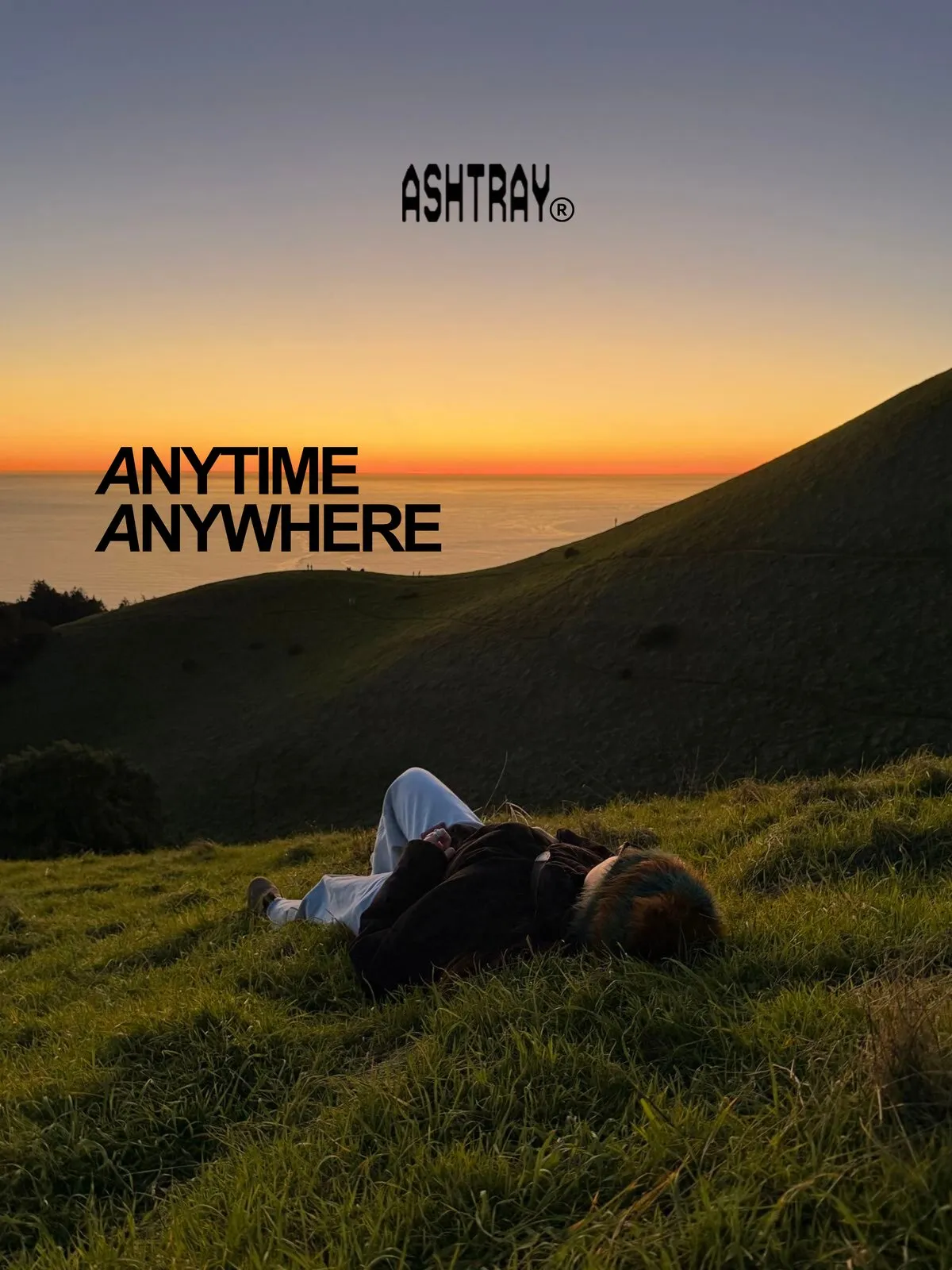
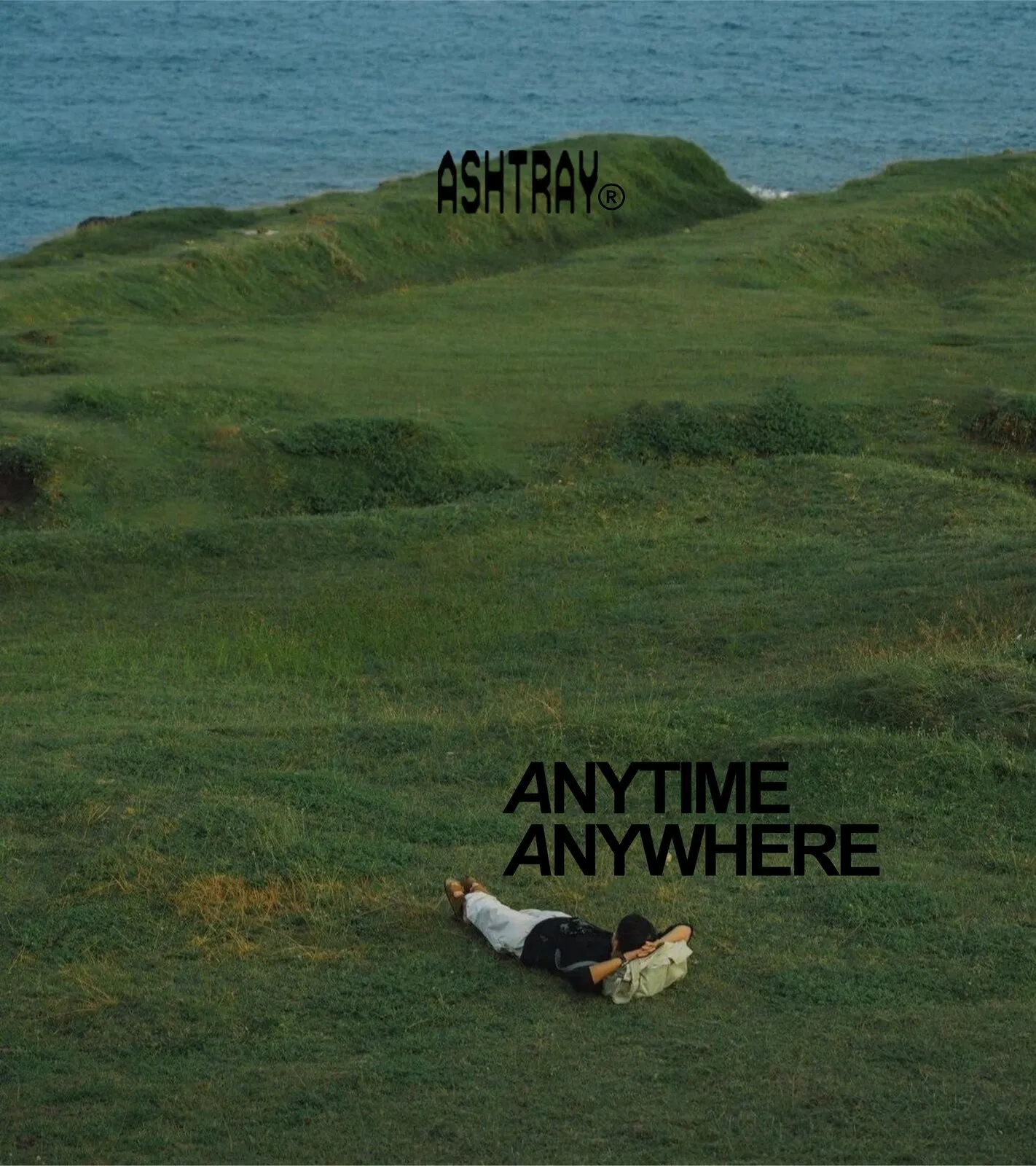
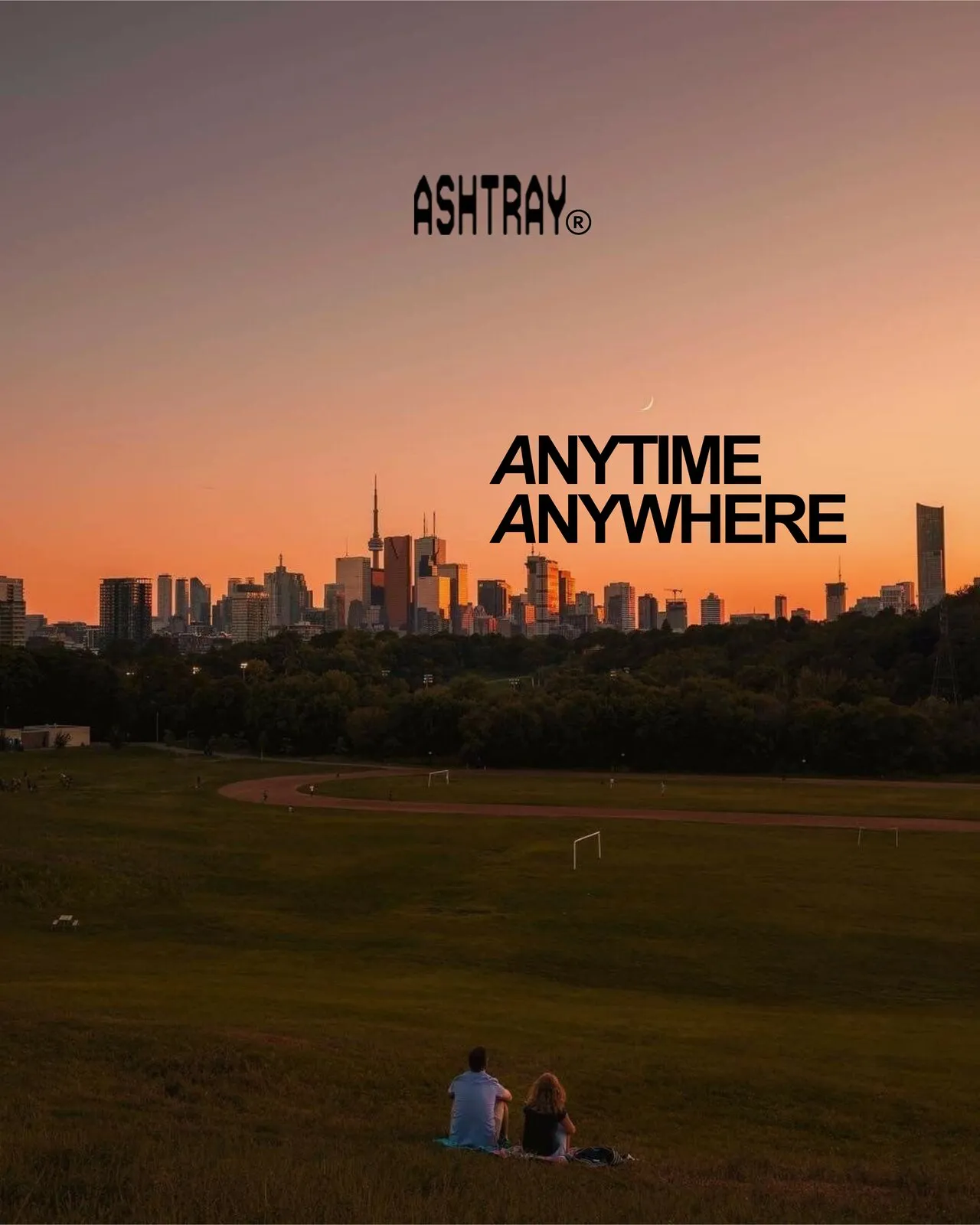

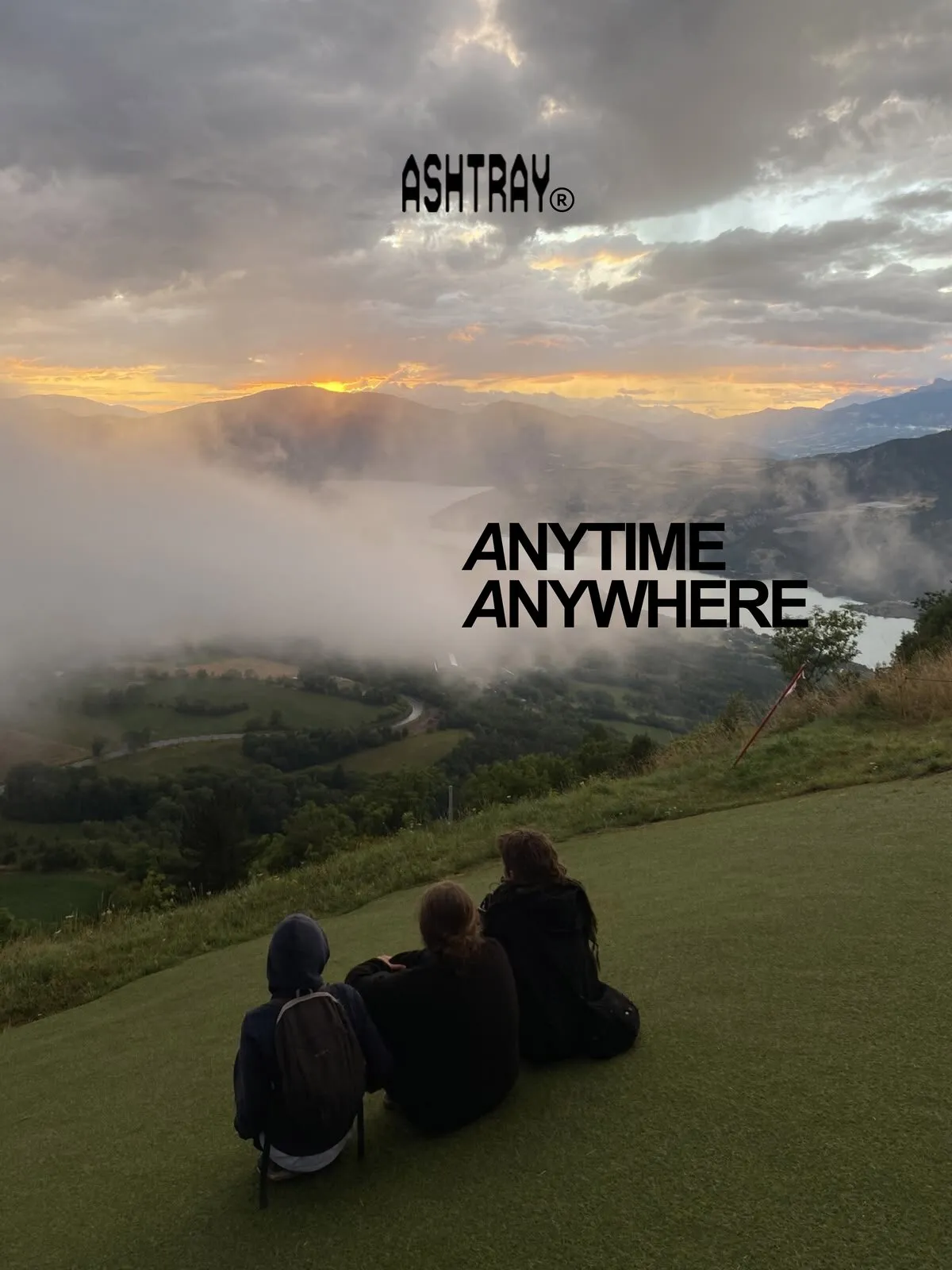
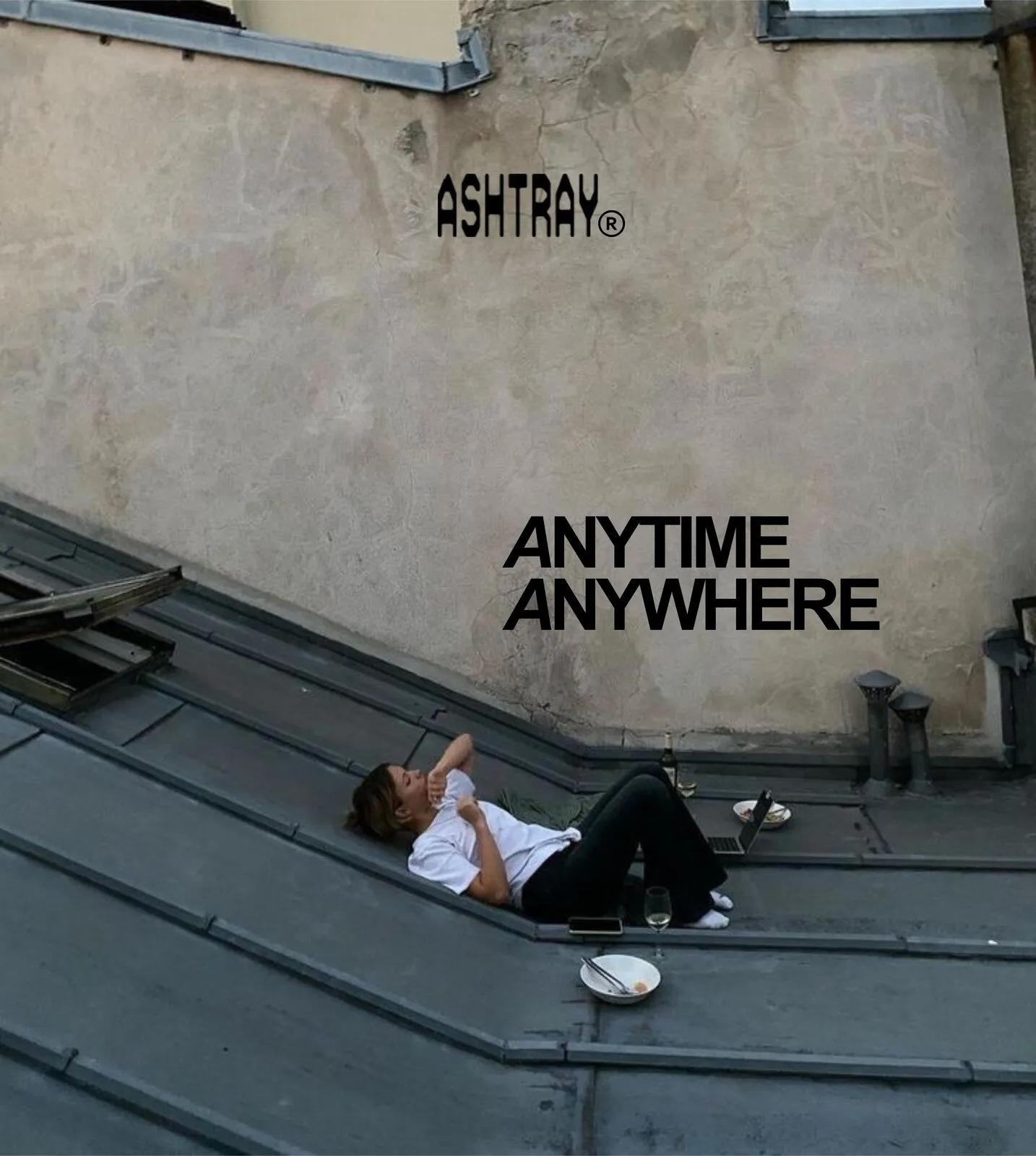
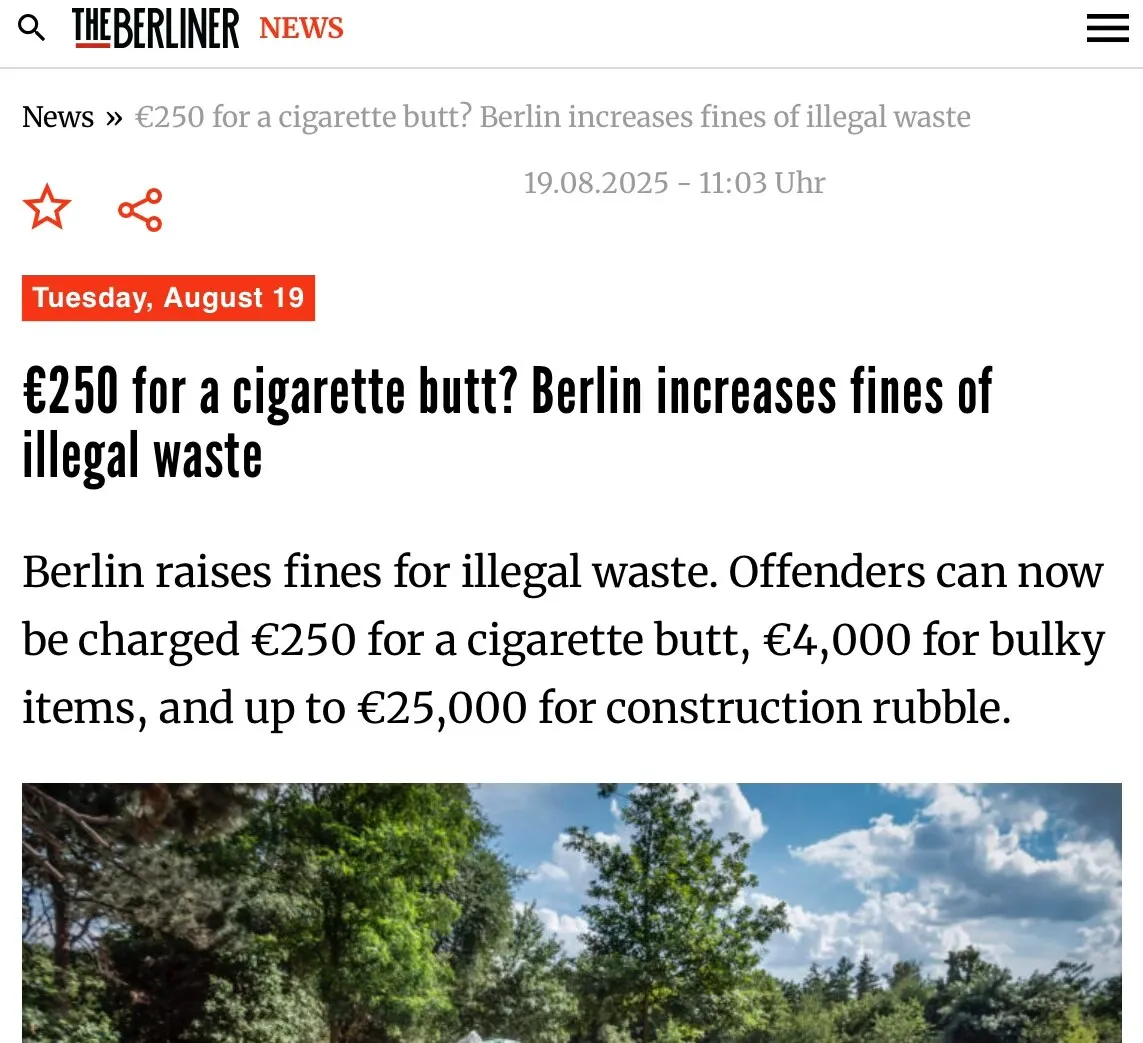
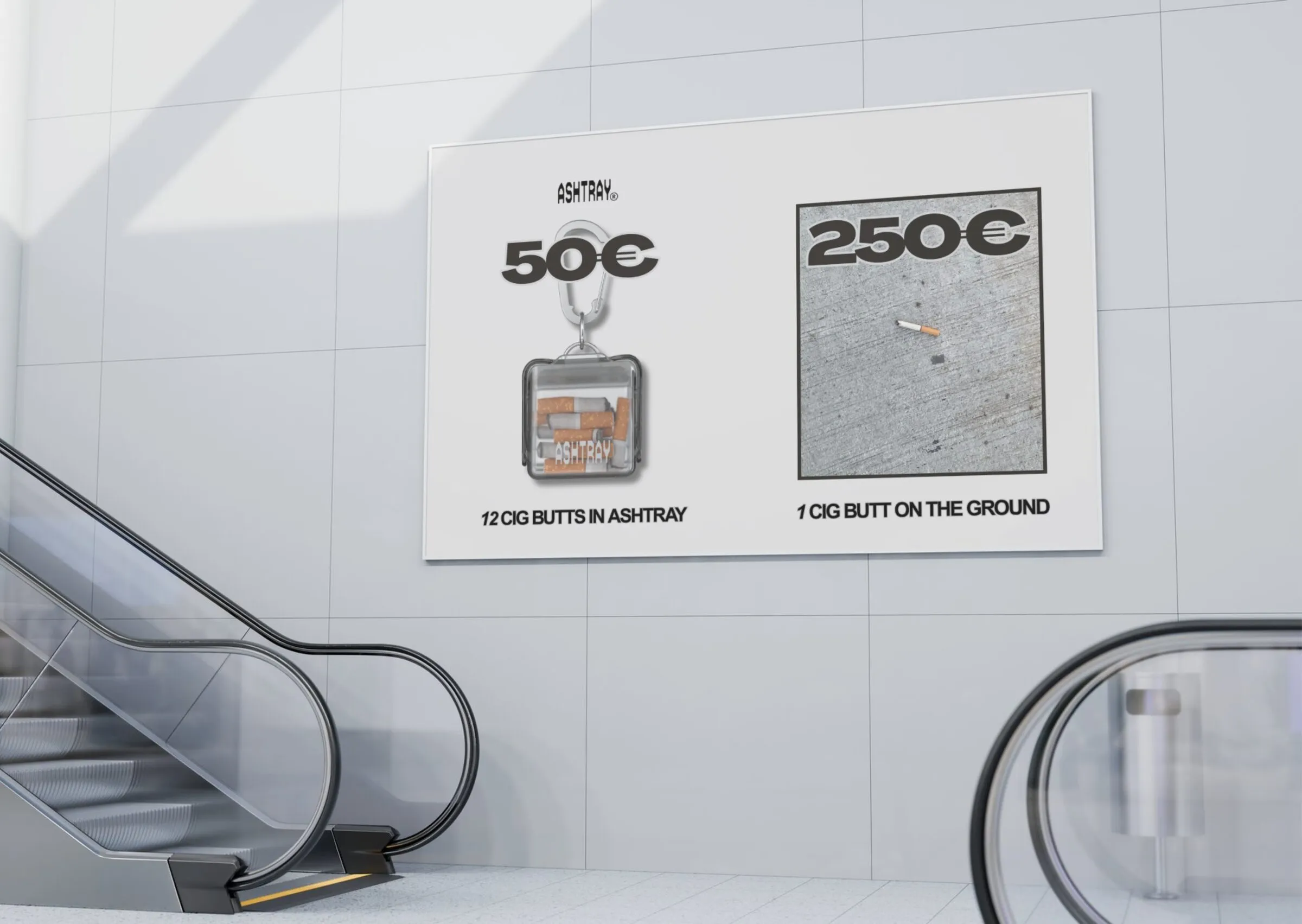
The reactive level is where the strategy meets the news. In August 2025, Berlin raised the fine for a butt thrown on the ground from €55 to €250.4 I didn’t want to moralise about it, so I let the numbers talk. On one side, an Ashtray full of twelve butts for €50. On the other, one butt on the pavement for €250.
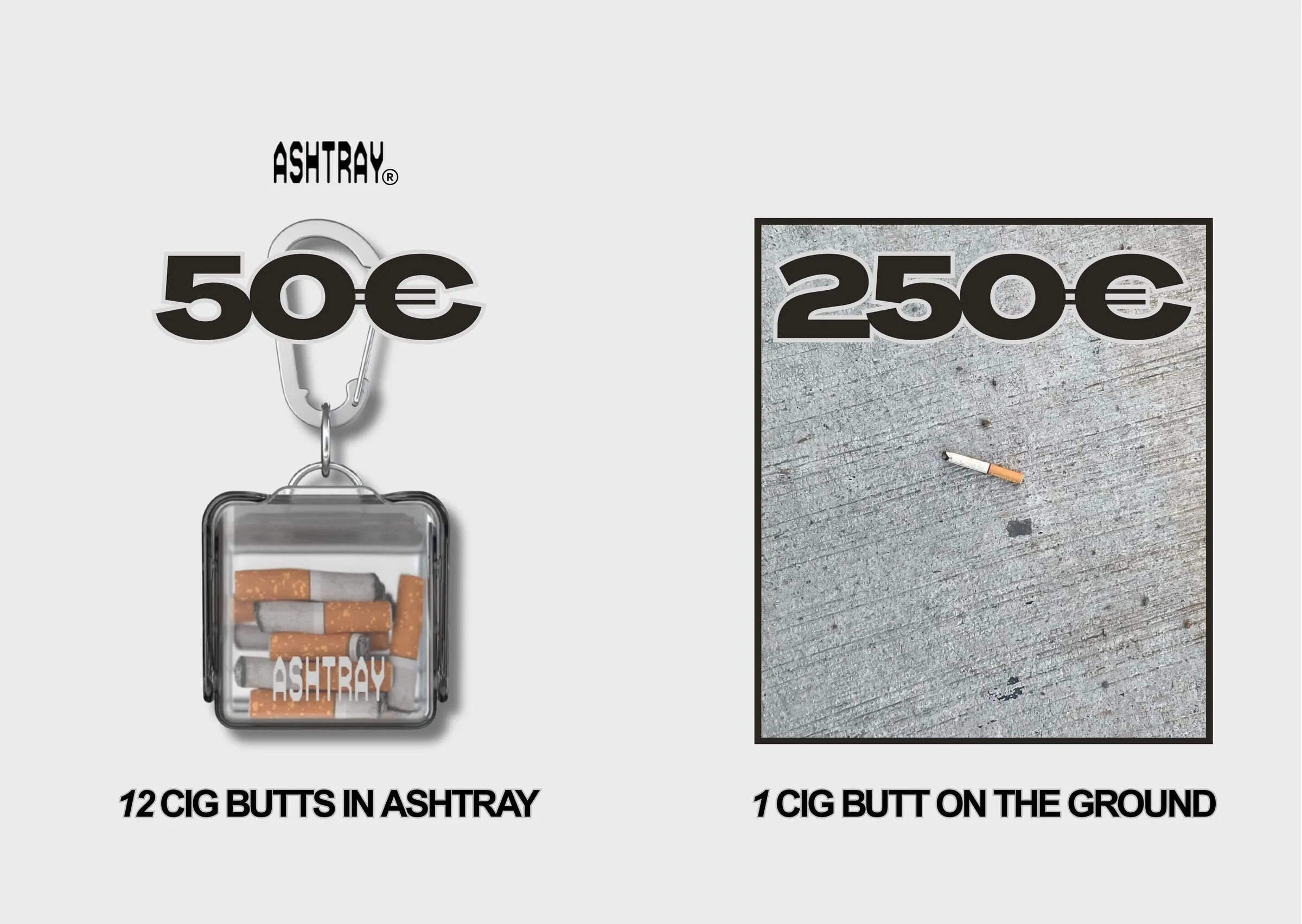
It belongs where the rule is felt. I placed it in the Berlin U-Bahn, next to the escalator, the last place before the street where people reach for a cigarette.
Looking back
This was a course project on a real brief, and my final pitch for the course. What I would keep from it is the order of the thinking. I started with a product and a brief that pulled in two directions. A conversation with the founder showed the brand was bigger than its first product. The research showed the function alone is worth little. And by setting aside everything people can dispute, I found the one benefit nobody can deny and built the rest on it: the audience, the lab, the voice and the three campaigns.
Worth remembering
- 01
Ask the founder what’s in the drawer. The next product can change what the brand is.
- 02
Drop the arguments people can dispute. Build on the one they can’t.
- 03
A good brand idea is also a filter: it tells you which products not to make.
The full project
For anyone who wants to read the whole project: the full brand strategy and communication strategy, as I presented it.
Sources
- Ashtray: client brief for the course; ashtray.cc, product pages and photos (size of AirPods, 10+ butts, airtight silicone seal).
- Bohdan Khamazenko, “Ashtray: brand strategy and communication strategy”, final presentation, Ninja School, 2026 (download above); chat with the founder, 22 February 2026.
- Assembly New York, “Tsubota Pearl”: a Tokyo-based company making metal and leather pieces since 1952.
- Japan Times, “Chiyoda Ward enacts smoking ban”, 25 June 2002; “Decorum drives bid to free streets of discarded butts”, 19 November 2006 (Japan Tobacco research: 69% of smokers own a portable ashtray, 27% use one daily).
- nippon.com, Japan Glances: Chiyoda’s 2002 ordinance, the first in Japan.
- Ville de Paris, “Paris lance son plan mégots”, and press release of 20 May 2025: 400,000 free pocket ashtrays; €135 fine.
- Berlin Senate, press release of 19 August 2025: fines from €250 for a thrown cigarette butt; The Berliner, “€250 for a cigarette butt?”, 19 August 2025.